





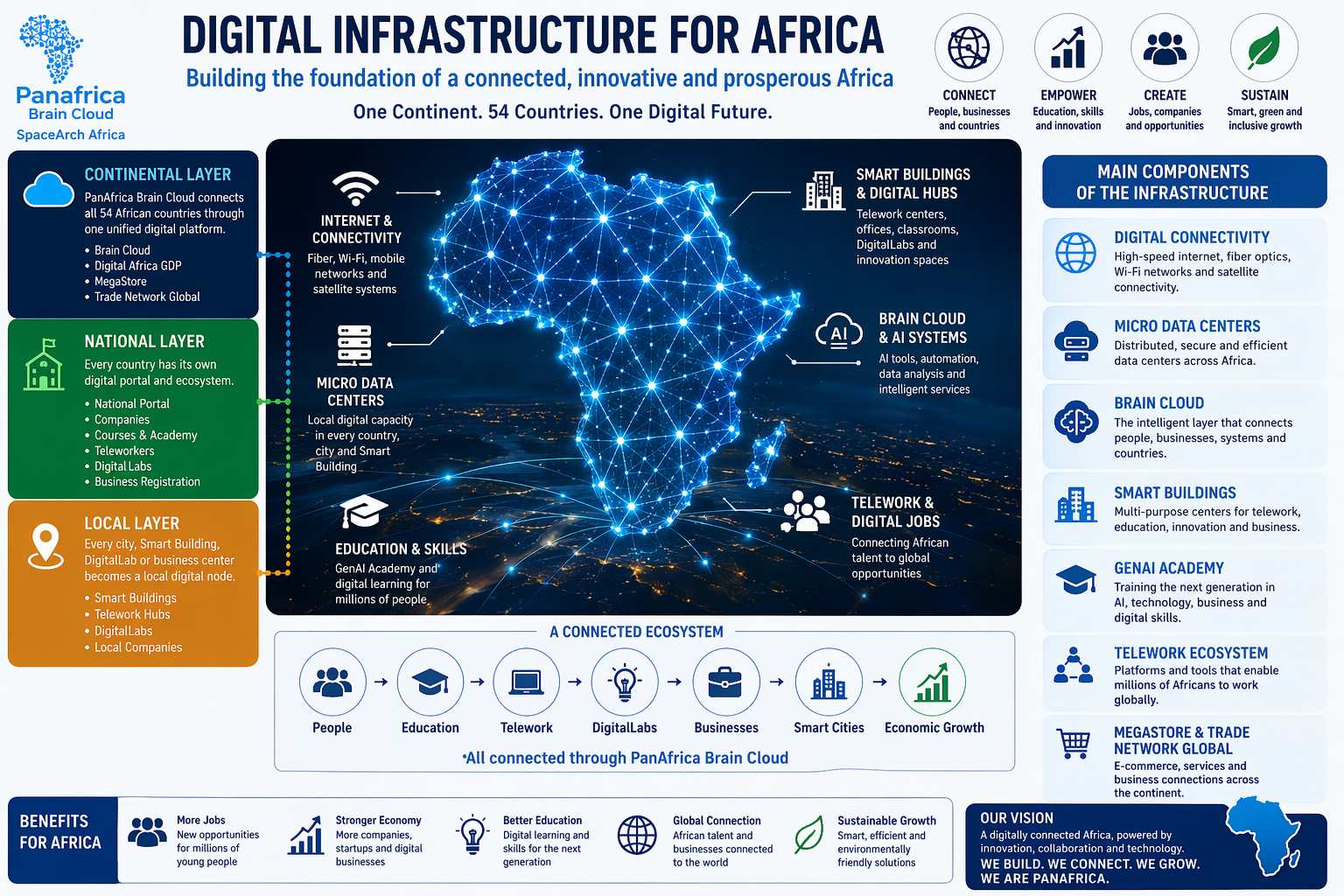
Digital Infrastructure for Africa is one of the most important foundations of PanAfrica Brain Cloud and SpaceArch Africa.
Without digital infrastructure, it is impossible to create a strong Digital Africa GDP, telework networks, online education, AI systems, Smart Cities, DigitalLabs or international business.
For this reason, PanAfrica Brain Cloud is designed not only as a portal, but as a complete continental digital infrastructure capable of connecting 54 African countries.
🌍 What Is Digital Infrastructure?
Digital infrastructure includes all the systems that allow people, companies, schools, startups and governments to connect, communicate and work.
Examples include:
- Internet
- Cloud systems
- Servers
- Micro Data Centers
- Digital platforms
- National portals
- Telework systems
- AI tools
- Smart Buildings
- Fiber and Wi-Fi networks
Digital infrastructure is the invisible foundation of the new African economy.
🚀 Why Africa Needs a New Digital Infrastructure
Many countries still face important limitations such as:
- Weak internet access
- Lack of local servers
- High technology costs
- Limited digital education
- Fragmented markets
- Low access to global opportunities
PanAfrica Brain Cloud proposes a different model.
Instead of waiting for one large system to appear, Africa can build its digital infrastructure step by step through:
- National nodes
- Smart Buildings
- Micro Data Centers
- DigitalLabs
- Teleworkers
- Local company networks
- Continental cloud systems
This makes the system faster, cheaper and easier to expand.
🧠 The PanAfrica Digital Infrastructure Model
PanAfrica Brain Cloud uses a modular and distributed architecture.
The system is based on several connected layers:
1. Continental Layer
The PanAfrica platform connects all 54 countries.
Examples:
- panafrica.africa
- Brain Cloud
- Continental Digital Map
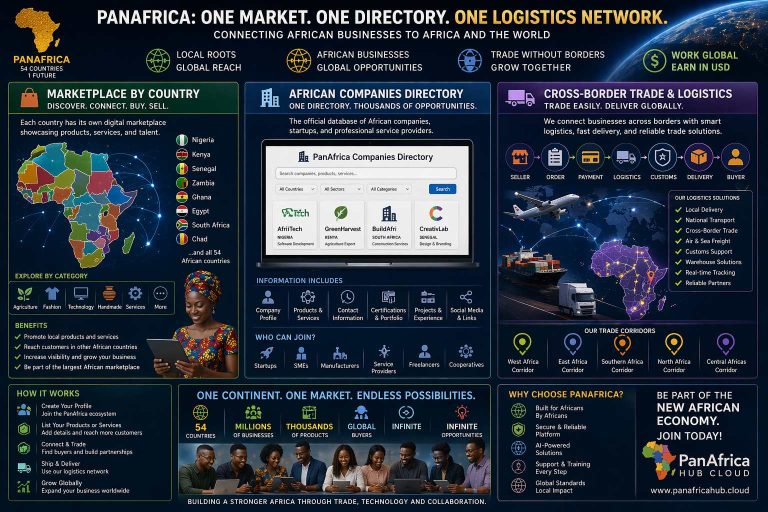
- MegaStore
- Trade Network Global
2. National Layer
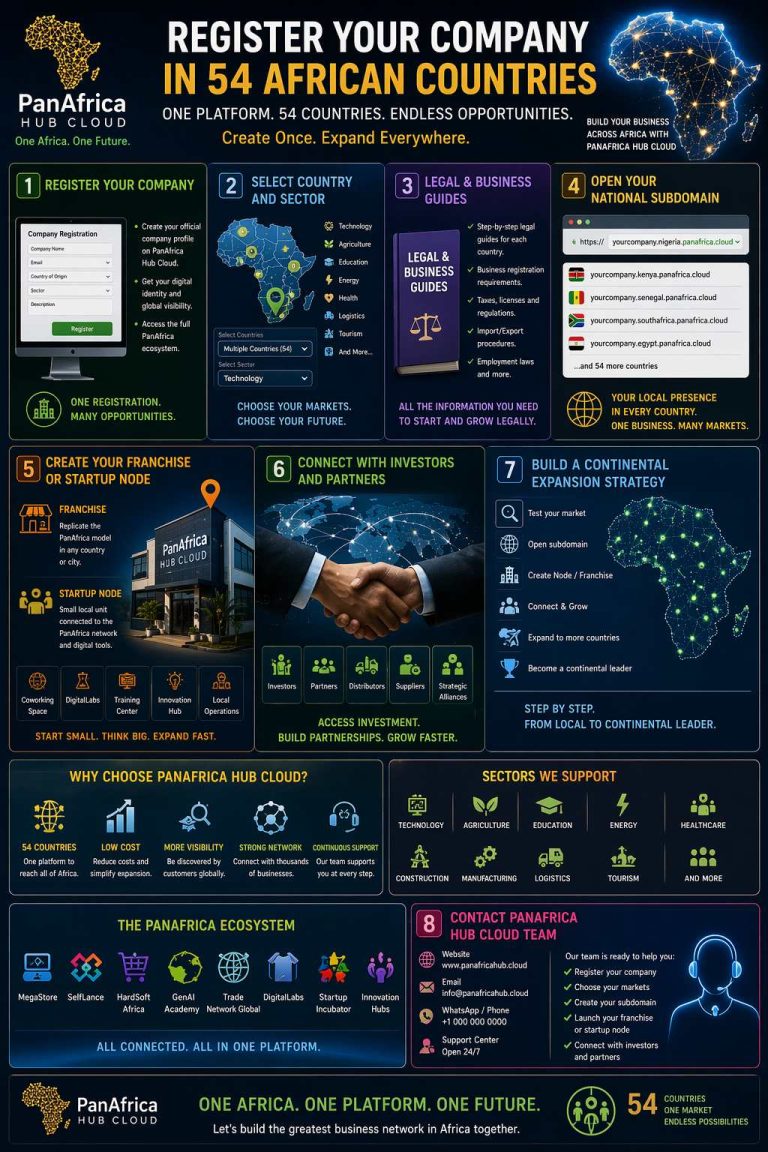
Every country can have its own national digital portal.
Examples:
- zambia.panafrica.africa
- nigeria.panafrica.africa
- senegal.panafrica.africa
Each national portal can contain:
- Companies
- Courses
- Teleworkers
- DigitalLabs
- Franchises
- Business registration
3. Local Layer
Every city, Smart Building, DigitalLab or business center can become a local node.
Examples:
- Lusaka Digital Hub
- Lagos Teleworker Center
- Dakar DigitalLab
- Nairobi Smart Building
⚡ Main Components of the Infrastructure
🌐 Internet and Connectivity
The first requirement of Digital Africa is reliable internet.
PanAfrica supports:
- Fiber
- Wi-Fi
- Shared digital hubs
- Mobile internet
- Smart Buildings with connectivity
The objective is to reduce barriers and make digital access easier.
🏢 Smart Buildings and Local Hubs
Smart Buildings are one of the main local infrastructure units.
They can include:
- Telework centers
- Meeting rooms
- Shared offices
- DigitalLabs
- GenAI Academy classrooms
- Micro Data Centers
This allows every city to create its own digital center.
💻 Micro Data Centers
Micro Data Centers help create local digital capacity.
They can support:
- National portals
- Telework
- Cloud services
- AI tools
- Local companies
- DigitalLabs
Instead of depending only on large foreign data centers, Africa can develop its own distributed network.
🤖 Brain Cloud and AI Systems
The PanAfrica Brain Cloud acts as the intelligent layer of the infrastructure.
It connects:
- Countries
- Companies
- Teleworkers
- DigitalLabs
- AI tools
- Digital Africa GDP
The Brain Cloud helps coordinate information, opportunities and projects across the continent.
🎓 GenAI Academy
Digital infrastructure is not only technology. It also requires people capable of using it.
GenAI Academy is the educational component of the system.
It helps train people in:
- Programming
- AI
- Business
- Telework
- Entrepreneurship
- Digital tools
Without education, infrastructure cannot grow.
🌍 Digital Infrastructure for Every Country
Each African country can build its own digital infrastructure inside the PanAfrica network.
Examples:
Zambia
- National portal
- Teleworker hub
- DigitalLab
- Smart Building
- Local companies
Nigeria
- Multiple DigitalLabs
- AI and software companies
- Regional Micro Data Centers
- National teleworker network
Senegal
- Startup ecosystem
- GenAI Academy center
- Trade Network Global
Chad
- Digital telework network
- Smart education
- Local business registration
Each country can adapt the model to its own needs.
🤝 A Shared Continental System
The most powerful aspect of the PanAfrica infrastructure is that it is shared.
Every country becomes stronger because it is connected to the others.
Examples:
- A course created in one country can be used by another.
- A company in one country can hire teleworkers from another.
- A DigitalLab can collaborate with teams in multiple countries.
- A startup can expand across Africa.
This creates a continental economy instead of isolated markets.
🚀 Opportunities for Companies and Entrepreneurs
Digital infrastructure also creates new business opportunities.
Companies can:
- Build Smart Buildings
- Install Micro Data Centers
- Offer internet and cloud services
- Create DigitalLabs
- Build telework platforms
- Develop AI and software solutions
Entrepreneurs can participate in the growth of the new Digital Africa.
🌱 Sustainable and Scalable Growth
PanAfrica infrastructure is designed to grow progressively.
The system does not require massive investment from the beginning.
It can begin with:
- One website
- One city
- One Smart Building
- One DigitalLab
- One country
Then it can expand step by step across Africa.
This makes the model more realistic, more affordable and more sustainable.
🌟 Final Vision
The goal of Digital Infrastructure for Africa is simple:
Create a connected Africa where every person, company and country can participate in the digital economy.
A future where:
- Millions of people work online
- Thousands of companies grow
- Technology becomes accessible
- Africa exports knowledge and innovation
- 54 countries become one digital network
Digital infrastructure is the foundation that makes this future possible.